Featured Blog

LeapOut Gets Media Spotlight on Award-Winning TV & Radio Show Pilipinas, Ngayon Na

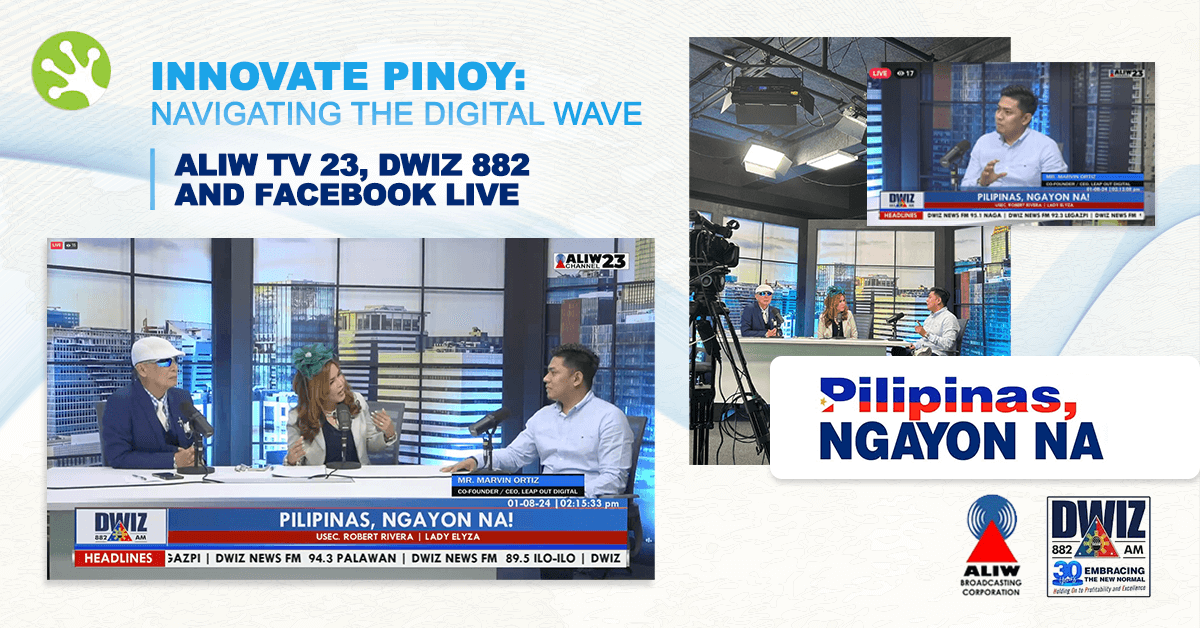
Marvin, LeapOut President and CEO, imparted digital marketing insights on the radio program on the topic Thriving Businesses: Ride the Digital Wave.  Marvin Ortiz, LeapOut Co-Founder and CEO, had the honor of guesting in a radio program Pilipinas, Ngayon Na on January 8, 2024, aired on DWIZ 882 and Aliw TV 23 and hosted by Undersecretary (USec.) Robert Rivera and Lady Elyza. Marvin’s guesting highlighted the power of digital marketing and e-commerce to the hosts, who, like many ordinary Filipinos, are still not well-versed but are enthusiastic about this thriving sector. Helping Businesses Leap Into Digital At the start of the program, USec. Rivera stressed the importance of keeping abreast with developments taking place on the Internet.  “We know that AI and digital are all over. That’s why communication time has been cut considerably. With the touch of a finger, you can video chat anywhere in the world and talk to anyone.” USec Rivera also admitted that many businesses in the Philippines are struggling to compete because they still opt to use traditional methods. However, he emphasized that to be competitive in today’s world, they need to keep up with the fast-changing business practices such as establishing an online business presence.  Taking off from this backgrounder by USec Rivera, Marvin introduced LeapOut and its mission.  He said that the company aims to help small and medium enterprises (SMEs) and even micro-enterprises “to leap into its digital transformation.” The company equips companies with capabilities to break into and then grow and succeed in the digital realm.  “We are a digital marketing agency that helps businesses maximize their business presence online — especially legacy businesses — to spot more opportunities and thrive online.”   “From First-Scale to Full-Scale” Marvin, one of the pioneers in the country’s digital marketing landscape, commented that it is LeapOut’s mission to help Filipino businesses, especially those who are eager to establish their footprint online via digital marketing.  “The goal of digital companies is not only to share information but also to help users navigate the digital landscape by elevating their user experience. Usually, we help companies that have the vision and goal to serve online customers but have no capabilities and capacities to venture into digital media,” he said. To guarantee success in this transformation, Marvin said LeapOut is committed to empowering its clients to succeed from laying their foundation online to providing excellent customer experience. This end-to-end approach is what digital marketing professionals consider the “from first-scale to full-scale” approach.   Using this extensive approach, the company has provided and is currently providing these services to its clients from SMEs to those belonging to the top ten Philippine companies.  “We have already helped and continue helping businesses and organizations in the Philippines. in transforming their digital footprint,” Marvin added. LeapOut’s clients include household brands such as SM, Ajinomoto, Cebuana Lhuillier, Malayan Insurance, and Wilcon Depot.  To accomplish this, LeapOut helps conceptualize, create, and compose digital content for its three key businesses: social media and content marketing, e-commerce, and paid media. The company started as a digital marketing agency. The company later ventured into e-commerce development and programmatic advertising.    Screengrab of Marvin explaining how digital marketing benefits businesses during the radio interview streamed live on Pilipinas, Ngayon Na Facebook page.  Hypertargeting 101 To showcase what digital marketing can do to businesses on the program, Marvin described the power of programmatic advertising. With this technology, companies can now show their marketing content and copies directly to their specific intended audience.  He demonstrated this technology through an example. A company wants to offer two contents to two demographics: Content A is for seniors and Content B is for millennials. With programmatic advertising in Google and social media platforms, the company can show only Content A for seniors in the platform you subscribed to and Content B to only your target millennial audience. Since this method will only allow your content to be seen by your ideal audience, it provides amazing efficiency to your campaign. It lowers the cost as it prevents you from showing the ads to unintended audiences. And because only your target people can access your content, your probability of sales increases considerably.   It Started With A Mission When talking about LeapOut’s mission, Marvin shared the humble beginnings of the company. He recalled the time when a plumber sought his service when he was still an advertising agent in 2009. Short of funds to pay for the ad, it took some time for the plumber to pay for the creative and publish it online.  At a time when the internet was just starting and selling online services was difficult, the freelance plumber believed that the new tech would open business opportunities. This kindled Marvin’s passion to open an agency to serve as a launch pad for the growth of SMEs and micro businesses. With digital marketing, he believes these small and startup businesses have a “leveling playing field” where they can compete head-on with established companies and corporations. Cybersecurity Insights Aside from digital marketing, Marvin also provided his insights on cybersecurity, especially on email and social media accounts.  “Social media accounts like Messenger and email addresses can be hacked and faked,” he stressed.  One of his takeaways is to be mindful of emails that we receive. For email, check for the sender. To find out if the email address or URL is legitimate, check the domain name if it matches the exact spelling of the domain name (.com or .edu) of legitimate sites. Another thing you can do is to verify whether the sender uses a real name. When you are doubtful of the sender, you should research if the email is factual over the Internet or confirm with your friends and people you trust. Pilipinas, Ngayon Na! airs every 2 pm – 3 pm on DWIZ 882 kHz and Aliw TV 23. The entire interview can be streamed on the Pilipinas, Ngayon Na Facebook page.
Continue Reading

Featured Blog

LeapOut Gets Media Spotlight on Award-Winning TV & Radio Show Pilipinas, Ngayon Na

Marvin, LeapOut President and CEO, imparted digital marketing insights on the radio program on the topic Thriving Businesses: Ride the Digital Wave.  Marvin Ortiz, LeapOut Co-Founder and CEO, had the honor of guesting in a radio program Pilipinas, Ngayon Na on January 8, 2024, aired on DWIZ 882 and Aliw TV 23 and hosted by Undersecretary (USec.) Robert Rivera and Lady Elyza. Marvin’s guesting highlighted the power of digital marketing and e-commerce to the hosts, who, like many ordinary Filipinos, are still not well-versed but are enthusiastic about this thriving sector. Helping Businesses Leap Into Digital At the start of the program, USec. Rivera stressed the importance of keeping abreast with developments taking place on the Internet.  “We know that AI and digital are all over. That’s why communication time has been cut considerably. With the touch of a finger, you can video chat anywhere in the world and talk to anyone.” USec Rivera also admitted that many businesses in the Philippines are struggling to compete because they still opt to use traditional methods. However, he emphasized that to be competitive in today’s world, they need to keep up with the fast-changing business practices such as establishing an online business presence.  Taking off from this backgrounder by USec Rivera, Marvin introduced LeapOut and its mission.  He said that the company aims to help small and medium enterprises (SMEs) and even micro-enterprises “to leap into its digital transformation.” The company equips companies with capabilities to break into and then grow and succeed in the digital realm.  “We are a digital marketing agency that helps businesses maximize their business presence online — especially legacy businesses — to spot more opportunities and thrive online.”   “From First-Scale to Full-Scale” Marvin, one of the pioneers in the country’s digital marketing landscape, commented that it is LeapOut’s mission to help Filipino businesses, especially those who are eager to establish their footprint online via digital marketing.  “The goal of digital companies is not only to share information but also to help users navigate the digital landscape by elevating their user experience. Usually, we help companies that have the vision and goal to serve online customers but have no capabilities and capacities to venture into digital media,” he said. To guarantee success in this transformation, Marvin said LeapOut is committed to empowering its clients to succeed from laying their foundation online to providing excellent customer experience. This end-to-end approach is what digital marketing professionals consider the “from first-scale to full-scale” approach.   Using this extensive approach, the company has provided and is currently providing these services to its clients from SMEs to those belonging to the top ten Philippine companies.  “We have already helped and continue helping businesses and organizations in the Philippines. in transforming their digital footprint,” Marvin added. LeapOut’s clients include household brands such as SM, Ajinomoto, Cebuana Lhuillier, Malayan Insurance, and Wilcon Depot.  To accomplish this, LeapOut helps conceptualize, create, and compose digital content for its three key businesses: social media and content marketing, e-commerce, and paid media. The company started as a digital marketing agency. The company later ventured into e-commerce development and programmatic advertising.    Screengrab of Marvin explaining how digital marketing benefits businesses during the radio interview streamed live on Pilipinas, Ngayon Na Facebook page.  Hypertargeting 101 To showcase what digital marketing can do to businesses on the program, Marvin described the power of programmatic advertising. With this technology, companies can now show their marketing content and copies directly to their specific intended audience.  He demonstrated this technology through an example. A company wants to offer two contents to two demographics: Content A is for seniors and Content B is for millennials. With programmatic advertising in Google and social media platforms, the company can show only Content A for seniors in the platform you subscribed to and Content B to only your target millennial audience. Since this method will only allow your content to be seen by your ideal audience, it provides amazing efficiency to your campaign. It lowers the cost as it prevents you from showing the ads to unintended audiences. And because only your target people can access your content, your probability of sales increases considerably.   It Started With A Mission When talking about LeapOut’s mission, Marvin shared the humble beginnings of the company. He recalled the time when a plumber sought his service when he was still an advertising agent in 2009. Short of funds to pay for the ad, it took some time for the plumber to pay for the creative and publish it online.  At a time when the internet was just starting and selling online services was difficult, the freelance plumber believed that the new tech would open business opportunities. This kindled Marvin’s passion to open an agency to serve as a launch pad for the growth of SMEs and micro businesses. With digital marketing, he believes these small and startup businesses have a “leveling playing field” where they can compete head-on with established companies and corporations. Cybersecurity Insights Aside from digital marketing, Marvin also provided his insights on cybersecurity, especially on email and social media accounts.  “Social media accounts like Messenger and email addresses can be hacked and faked,” he stressed.  One of his takeaways is to be mindful of emails that we receive. For email, check for the sender. To find out if the email address or URL is legitimate, check the domain name if it matches the exact spelling of the domain name (.com or .edu) of legitimate sites. Another thing you can do is to verify whether the sender uses a real name. When you are doubtful of the sender, you should research if the email is factual over the Internet or confirm with your friends and people you trust. Pilipinas, Ngayon Na! airs every 2 pm – 3 pm on DWIZ 882 kHz and Aliw TV 23. The entire interview can be streamed on the Pilipinas, Ngayon Na Facebook page.
Continue Reading

Generative AI: Pros & Cons of Using AI-Generated Text and Content Generators

Just weeks after OpenAI rolled out ChatGPT, more and more people have been utilizing this advanced tool to automate tasks and create AI-generated text, image, video, and other content types. Being the fastest-growing web platform, it is being hailed as a dependable tool to simplify tasks at work and school as much as it is being denounced for the dangers it poses on the future of humanity.  Whether we love or hate it, we must embrace ChatGPT and other generative AI apps as an emerging technology changing how we live and work.  What is Generative AI? ChatGPT is one of the most widely used generative AI apps. Boston Consulting Group defines Generative AI as “a set of algorithms, capable of generating seemingly new, realistic content—such as text, images, or audio—from the training data.”  It is an artificial intelligence tool that creates new and unique content, including images, music, and text. While it has many benefits, it also has some potential drawbacks that users must consider. This article will explore the cons and pros of generative AI and its possible impact on society. Advantages of Generative AI With its power to generate text, audio, and other images, this AI type is a blessing to many professionals, particularly marketers, and entrepreneurs. Here are some of the clear benefits of this technology to society: Enhanced Efficiency and Productivity Generative AI can automate tasks and reduce task time and costs. This feature is handy in industries where repetitive tasks can be time-consuming and expensive. Workers under these companies can focus more on other more impactful activities, boosting their productivity while reducing the use of resources on routine work. Personalized Content Content producers and professionals can use generative AI to create customized user experiences. This benefit can enhance customer satisfaction and loyalty, as users feel that they are receiving personalized attention. These applications can pull data and information from the dataset it was trained on to produce the most suitable content or relevant suggestions.  For example, a company can leverage its social media campaigns using generative AI to create custom content targeting a particular buyer persona. Sophisticated Artworks Creative professionals can use generative AI to enhance artistic expression, leading to innovative art and music. Professionals can even use AI in the development of new products.  Product developers can create prototypes of new products with this advanced tool. A good example is DALL-E, a generative AI that can generate AI-generated images. More Accurate Results Generative AI can generate highly accurate content, especially in number-crunching professions such as accounting and finance. Experts in these fields can capitalize on generative AI to produce highly accurate financial forecasts based on historical data. Companies can have more informed decision-making and better financial outcomes with more reliable results. Scalable Production Quick and efficient production of content is possible with generative AI, making companies more scalable. Marketers and professionals can benefit from this technology through fast and consistent content production and distribution to different channels and platforms. High Adaptability From the dataset it has been trained on, generative AI can produce different results from different patterns, making it highly adaptable. For example, the transportation industry can use generative AI to adapt to changing traffic patterns and optimize routes for vehicles. This modern approach can result in highly efficient and cost-effective transportation systems. Disadvantages of Generative AI While the above advantages of Generative AI can revolutionize various industries, it is not a foolproof technology that businesses can rely on. Users should note multiple risks and limitations to avoid catastrophic consequences. Here are some of them: Biased Output ChatGPT and other forms of Generative AI only base their generated content on the data they are trained on. So, if the training data is biased, then the output generated by the AI will also be biased.  These results can have severe consequences, especially in industries such as healthcare and finance, where accurate and unbiased results are crucial. Lack of Control Generative AI can sometimes generate unexpected and undesirable results because it only operates using algorithms that may lack context. Your lack of control and fine-tuning makes its output unreliable. This fact can be a problem in industries such as design and marketing, where the output’soutput’s alignment with your company’s brand image and aesthetic is paramount. Intellectual Property Concerns This technology can generate content that is direct copies of copyrighted materials. This action can raise concerns about intellectual property and other legal issues. Being accused of intellectual property infringement can damage your company’s reputation. Data Privacy Concerns Generative AI lacks a mechanism for screening whether large amounts of data come from confidential sources. This issue can raise concerns about data privacy and security, especially in healthcare and finance industries, where sensitive personal information is involved. Reliance on Training Data Generative AI only pulls its results from the training data it receives. In the case of ChatGPT, its developers only trained it in data until 2021. This fact limits the generated output, leading to incomplete, biased, or irrelevant results, especially when real-time and latest information is required.  Ethical Concerns Generative AI can raise ethical concerns, such as creating realistic images or videos of people without consent. Generating AI-generated photos can also pose problems in industries such as law enforcement. Using generative AI to create images of suspects can lead to false accusations and wrongful convictions. Lack of Context While Generative AI surpasses human’s ability to generate insights from data, it cannot still assess the situation where it is by itself. It needs human input to find out the context of where and when it is used for. Industries that Benefit from Generative AI In such a short time, generative AI has become a rapidly growing app that has impacted many industries. This cutting-edge technology can produce new and innovative content that can help companies streamline their workflows, improve their customer experience, and gain a competitive edge. Knowing these benefits, tech giants like Microsoft and Google invest billions of dollars in AI research startups like OpenAI to

Continue Reading

Top 10 Predictions on Where E-commerce Is Headed in the Philippines

Since the pandemic, e-commerce has been on the rise in the Philippines. More Filipinos are shopping online for practically everything. And with more businesses going online and opting for Shopify e-commerce SEO, it’s only natural that e-commerce will continue to grow in the Philippines. Certain factors drive the growth of e-commerce in the Philippines. First, a growing middle class with more disposable income means more Filipinos can afford to shop online.  Second, a young population, with around 60% under the age of 35, is significant because younger people are more likely to shop online than older people.  Finally, the Philippines has a growing number of internet users. According to a digital report, over 76 million internet users are now in the Philippines. That’s an increase of around 2.8% from the previous year. If you’re a business looking to get involved in e-commerce or scale your existing online store, now is the time to work with Shopify e-commerce SEO experts to achieve your goal. It pays to consider where e-commerce is headed in the Philippines so you can make well-informed decisions about improving and growing your business. Here are the top 10 predictions you should know to make your business future-ready.  1. Green consumerism: E-commerce will become more sustainable. Eco-friendly practices in e-commerce have become increasingly common. Most delivery packages today are wrapped with recyclable materials. Deliveries use bicycles instead of motorcycles.  Shoppers are impressed and supportive when businesses take an extra step toward environment-conscious choices. And with the growth of green consumerism, consider making environment-conscious choices regarding the products you sell and how they are packaged and delivered.  2. Voice search optimization: Voice shopping will give way to hands-free online shopping.  With Siri and Alexa simplifying many online tasks, voice search is becoming popular and may be the next step for product searches in online shops. Voice shopping will make product selection faster and easier, making the entire shopping process more convenient.  Optimize your site for voice search. Use long-tail keywords, have fresh content as voice search relies heavily on this, and optimize your site for local search. Talk to our Shopify e-commerce SEO experts to learn more about these. 3. Chatbot services: Chatbots will play an essential role in online shopping. Chatbots are being refined and rapidly evolving. They used to only provide customer service by answering questions and addressing concerns. Now, they also ask about shoppers’ preferences and offer product suggestions.  In the future, chatbots will become an all-time attendant in e-commerce that will see shoppers through at every stage of their purchase. Start planning now how chatbots can be integrated into your e-commerce system.  4. Augmented reality: Online sales will skyrocket from augmented reality features.  Augmented reality has made it easier for shoppers to make purchase decisions. It allows them to explore a product as though they are physically present in a store. They won’t just be buying what they see but also what they experience virtually.     This feature may prove crucial to your business as it inspires the trust and confidence of shoppers to choose your product. Augmented reality can boost your sales while reducing return rates.  5. Drone delivery: Packages will be delivered by drones.  The integration of drones in e-commerce is still in its early stages, but it has the potential to revolutionize the way people shop online. Drones offer a fast and convenient delivery option for online shoppers, and they can help businesses save on shipping costs. While drone systems for e-commerce are still being refined, it is worth looking into as something to be integrated into your online shopping process.  6. Digital payments: More sophisticated payment options will be available, giving rise to better payment processing. Mobile wallets have become popular in making payments and are now as common as credit and debit cards. Shoppers are comfortable making online payments due to improved security as well.  Eventually, payment systems will evolve further and become more sophisticated and seamless between businesses and shoppers. The potential of cryptocurrency is also largely talked about nowadays. Ensure your business is ready to adapt to these changes as shoppers grow savvier.  7. Synergized shops: Online and brick-and-mortar shops will be integrated.  More online shops sprung up during the pandemic and are here to stay. Several businesses opened flagship stores on various e-commerce sites. Still, most have built their own online shops with improved systems for better control and first-party data but continue running their brick-and-mortar shops.  If the same applies to your business, it is crucial that your online and in-store processes, shopper experiences, and digital marketing are all seamlessly integrated.  8. Social commerce: Live selling will evolve as social commerce continues to grow. Live selling is significantly helpful to both businesses and shoppers. Brands talk directly to interested buyers while shoppers learn more, see demonstrations, and ask questions during the live selling event. Often, shoppers also win prizes or purchase products at low prices.  One of the current e-commerce trends is holding these live selling events on social media platforms. With social platforms being the main venue for big promotions like these, your social commerce must be able to catch up with evolving forms of live selling. 9. Multichannel personalization: Highly personalized shopping experience will be the norm for all shoppers.  Customer service has advanced from simply addressing concerns and inquiries. It has become broader and more profound, providing customers with a highly personalized experience that inspires their loyalty to the brand.  Multichannel personalization will become the norm as shopping is done through various means and customer data provides valuable insights to businesses. Hence, shoppers get a consistently positive experience from the brand.  Keep your customers loyal to you by consistently providing them with this personalized treatment regardless of where or how they buy from your stores.  10. Metaverse: Digital marketing and online shopping will rise to a new level. Metaverse e-commerce platforms are becoming increasingly popular, offering a unique and immersive shopping experience. Unlike traditional e-commerce platforms, metaverse e-commerce platforms allow shoppers to

Continue Reading

The New LeapOut Website Is Live

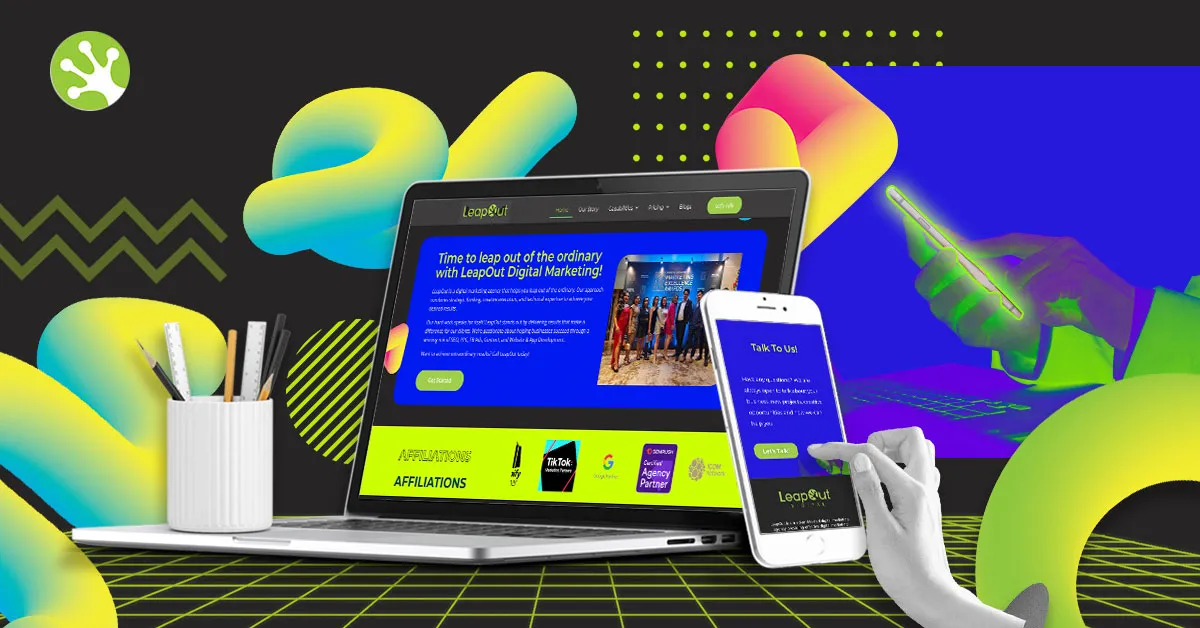
LeapOut Launches Newly Revamped Website, Geared Towards the Future of Metaverse, Blockchain, and AI-Revolution We are proud to announce the launch of our newly revamped website, crafted to resonate with the future of digital technologies. With a carefully curated design that targets Gen Z and millennials, the new LeapOut website is geared towards creating an immersive experience for visitors by integrating visually captivating design elements and well-crafted copy. “The new website has a futuristic touch to it, aligned with the latest trends in the digital landscape,” said Benedict Yee, CTO. “Our team has worked tirelessly to make the website more engaging and interactive for our visitors, catering to their unique requirements and preferences.” The website’s revamped design features captivating visuals and seamless functionality, with a stunning video presentation banner at the header setting the tone for the immersive experience. The Graphics Team has selected fonts that are optimized for readability, user-friendly, and mobile responsive, ensuring easy navigation and an impeccable user experience for all visitors. “Our objective was to make the website more appealing to the future of digital technologies, catering to the needs and preferences of Gen Z and millennials,” said Jay Alim, Lead Graphic Designer. “Our newly selected colors convey the metaverse feel, with neon green providing an accent that signifies the future of blockchain and AI revolution. Additionally, subtle animations and motion graphics represent the dynamic spirit of our young audience.” At LeapOut, we understand how essential it is to remain innovative and future-focused in the rapidly evolving digital landscape. With our newly revamped website, we’re confident of enhancing our visitors’ experience and providing them with unbeatable value.

Continue Reading

Google’s Project Magi: The AI-Powered Search Engine of the Future

Artificial intelligence has caused significant disruptions in the tech industry. The release of ChatGPT, AI-powered search, and other AI applications has awed, shocked, and even instilled fear and worries in businesses across various industries. Automating different workflows leads to significant changes impacting how companies conduct business.  Even tech giants that once dominated the internet, like Google, are not spared by these cataclysmic changes. The search leader has recently encountered the most significant challenge in its two-decade existence. After Microsoft rolled out ChatGPT-powered Microsoft Bing, Google is facing a possible substantial blow in its operations and profitability. To counter the threat Microsoft poses, Google has reportedly started Project Magi, a move expected to significantly boost the capabilities of the world’s leading search engine.  This article is LeapOut’s take on Google’s latest development and how it will affect SEO, paid ads, and other digital marketing activities.  What is Google’s Project Magi? According to the New York Times, Project Magi is the name of the significant upgrade of Google’s popular search engine. Once the new-generation Google rolls out, which the company targets this May, users can enjoy a better user experience with its AI-powered features to deliver more accurate search results. As of this posting, only the NY Times report is the source of information.  Project Magi will make AI more accessible online | Photo from Freepik Google Project Magi features Google searchers can expect a considerable leap in user experience once the Project Magi kick-starts. So far, the article has mentioned two significant features: AI-powered search  With Project Magi, Google is expected to integrate generative AI in its current search engine, making it a ChatGPT-like interface and functionality. This upgrade lets Google anticipate users’ needs and makes Google more user-friendly while giving more in-depth search results.  In his blog, SEO expert Neil Patel predicted the next-generation Google as a platform where users could interact with a “smarter version of Alexa.” This feature makes the future search experience more intuitive as if you are conversing with a human while accessing Google’s usual search function.  Project Magi will enable faster and more convenient online transactions | Photo from Freepik Enable transactions Magi gives Google the power to process e-commerce transactions, allowing for smoother and more intuitive purchases. According to the report, searchers could purchase and book accommodations through this project. This feature enables financial transactions while maintaining profit from their existing Google search ads. What Prompted Google? Google hired around 160 engineers to develop the project after it experienced a significant blow with its partnership with Samsung. The search giant discovered that the world’s largest smartphone producer was in talks with Microsoft to use Bing as its default search engine. If Google would not do anything, Samsung’s partnership with Microsoft could cost Google $3 billion in yearly revenue.  Samsung’s decision comes after Microsoft released the new version of Bing, which is powered by ChatGPT. After the impressive launch of this AI chatbot, which currently holds the record as the fastest-growing app in history, Microsoft has taken a solid grasp of the generative AI wars. Just months after ChatGPT’s release, the software giant followed up its success by introducing AI-powered Bing.  Through Magi, Google also attempts to regain its reputation as a severe AI player following the devastating blow it experienced while introducing Bard.  Future AI-Powered Developments by Google  Project Magi was not the first time Google felt a severe existential threat from ChatGPT. Just weeks after OpenAI released the AI app to the public, Google started developing its generative AI version, Google Bard. But the market’s unimpressed response to Google’s lackluster presentation and glitches in the generative AI’s performance during Bard’s launching caused serious concern about Google’s capabilities in the AI field.  However, as a company at the forefront of AI, Google users can expect more developments that aim to revolutionize the internet and other tech industries. The search giant recently fostered its commitment to AI research by launching Google DeepMind. Integrating Google Research’s Brain team and DeepMind, a London-based AI company Google acquired in 2014, would give the tech giant leverage in offering the latest development in many facets of artificial intelligence, not just generative AI.  Some of the future developments in Google’s development pipeline include: AI-powered Google Earth’s mapping technology and music search through a conversation with a chatbot GIFI image creator that would use AI to create images in Google Image results. Tivoli Tutor is an education application that teaches users new languages using open-ended AI text conversations. Searchalong allows users to ask questions to a chatbot while surfing the internet using Google Chrome.   Search will become more advanced through Project Magi | Photo from Freepik How Would Magi Impact Digital Marketing? Google’s impending upgrade can lead to significant SEO and paid ads disruption. Marketing professionals are still waiting for Google regarding Magi’s impact on its SEO algorithms and paid ad procedure changes.  LeapOut is always looking for developments in Google and other companies that will impact our services. Like other digital marketing experts and influencers, we closely monitor the progress of the latest marketing technologies, especially the platforms and tools we use. Conclusion Google focuses on retaining its online AI dominance through the reported Project Magi. By hiring 160 experts to develop a considerable upgrade of its search engine, it attempts to revolutionize search by making it more intelligent and intuitive while allowing transactions to occur. Aside from these additional features, the tech giant has many reported projects underway, including AI-powered mapping, image creation, and language learning apps.  Digital marketing has undergone significant developments that caused changes in the way we do business online. These improvements have also caused substantial adjustments in the visibility and ranking of web pages. So far, marketers still need to figure out how Magi will impact SEO and other aspects of digital marketing.  As a multi-awarded digital marketing company, LeapOut sees to it that we always keep updated on the latest developments in the industry, especially the integration of AI to browsers and search engines

Continue Reading

What Is ChatGPT, And How Does It Impact Filipinos?

Barely a few months after its release, ChatGPT has been making waves on the internet since OpenAI launched it in November 2022. From being an unknown app, it took only one week to reach 1 million users, making it the fastest-growing web app in history. Have you wondered how ChatGPT works? What’s in ChatGPT that has attracted millions of users, including Filipinos? Would this advanced technology improve our search, discovery, and doing things? How does this app, which an unknown startup developed, has been challenging tech giants like Google and is on course to revolutionize how Filipinos and the rest of the world live and work? This article is LeapOut’s response to the myth and mystery surrounding ChatGPT and how we, as a digital marketing company, use this disruptive technology to simplify our tasks and boost our productivity.  Person typing a prompt on ChatGPT | Photo from Freepik What is ChatGPT? Let us hear the answer straight from ChatGPT’s “mouth.” Below is the screenshot of the actual response I got: To make sense of this definition from a non-techy standpoint, let us dissect what “GPT” means from ChatGPT.  What does GPT stand for in ChatGPT? GPT stands for Generative Pre-trained Transformer, a techy way of saying it is a chatbot that can answer any query. According to the app, GPT is “based on a transformer architecture and is pre-trained on large amounts of text data to generate human-like responses to natural language inputs.” Suppose you’re not into machine learning or AI terminologies and want to know what GPT means in laypeople’s terms. In that case, it is a chatbot with the capacity to generate responses and content the way a human does (generative) by “learning” from a considerable amount of existing data (2021 and earlier, in the case of ChatGPT) (pre-trained) using a machine learning methodology that mimics how a human brain process language, or as OpenAI put it in its FAQs about the app, maximizes “the similarity between outputs and the dataset the models were trained on” (transformer). Taken as a whole, ChatGPT is an AI that can understand queries or prompts language after undergoing training for several years and then generating a response in text content from the pool of data it has been trained on.  The AI chatbot’s incredible power In just a few weeks after ChatGPT’s launch, tech giant Google, its apparent closest competitor, sounded code red, perhaps the most serious in its more than 20 years of dominance in online search. In just a few weeks, Google introduced Bard, its version of a generative AI bot.   Other tech companies followed suit after witnessing the exponential rise of OpenAI’s launch of their version of artificial intelligence chatbots. From Google, other industry leaders, including social media king Meta/Facebook, Chinese e-commerce behemoth Alibaba, and Firefox creator Mozilla, joined the AI bandwagon.  What is the Use of ChatGPT? What’s unique about ChatGPT, aside from being free of charge, is its power to generate “fresh” text content. Its primary purpose is to help users by generating responses to their queries in ordinary human language. It can also perform various natural language processing tasks, including translation, summarization, sentiment analysis, and language understanding.  Personally, as a web content specialist and a curious student of various fields, I tried using this advanced AI chatbot to do the following: Short to long-form content ChatGPT is a boon for people struggling to write short text such as slogans, captions for social media, and meta descriptions for blog posts. Language translation This powerful app can also act as a personal translator. I tried asking it to translate a simple sentence, “I think it will rain this afternoon.” into Chinese. Here is the result:  As a person who knows elementary to intermediate Chinese, its translation is accurate considering the nuances in the language. Creative writing It can also compose more creative text like marketing copies and taglines besides writing articles, blog posts, and other types of text content. It can also come up with lyrics and poems. Curious, I asked or prompted ChatGPT to write a sonnet about a beloved dog. The AI chatbot came up with this impressive result: Even though the composition is far from Shakespeare’s or Milton’s masterpiece, the AI wrote a decent poem that even an average person has difficulty writing.  Coding With the correct prompts, programmers can use the app to help them with coding tasks in most programming languages. It has been trained to generate web pages and apps. Data professionals can also use this to crunch numbers and easily create visualizations.  How LeapOut uses ChatGPT? In line with the company’s value of utilizing tech to provide the best service to clients, LeapOut has been using the latest online tools, including AI applications. Even before ChatGPT, the company’s content team has been using another AI app to facilitate our writing and content creation tasks.  The team has used it alongside other online tools just days after OpenAI announced its public release of ChatGPT. Aside from research, we also use it for creating outlines for articles and blog posts. The app is also helpful in generating ideas for our Social Media team’s copy ideation. Its responses still need improvement, so we must conduct additional research to ensure accuracy and avoid plagiarism.  Our SEO team also takes advantage of the AI chatbot’s capability as a companion to Semrush and other tools. It helps choose the best keywords to target in our campaigns and content requirements.  When was ChatGPT released? OpenAI, a San Francisco-based artificial intelligence research company, officially launched ChatGPT on November 30, 2022.  When prompted about its history, the AI chatbot came out with this output: Technology leaders, including CEO Sam Altman, Elon MZusk, Greg Brockman, Ilya Sutskever, John Schulman, and Wojciech Zaremba, joined hands in developing advanced artificial intelligence they claimed to benefit humanity. Its development was led by a team of AI researchers and engineers who used state-of-the-art deep learning techniques to train me on massive data. The training

Continue Reading
seo-best-practices-blog-page-banner

SEO Best Practices Non-Professionals Can Do Now

Making your search engine optimization (SEO) efforts successful can be grueling, especially if you need to learn the fundamentals. To ensure high Google rankings, you must use proven work processes to boost productivity and efficiency.  Here’s when you need the best practices SEO companies in the Philippines are regularly doing. What are SEO best practices? SEO best practices are tactics, techniques, and strategies to optimize your website’s content and structure. Doing these allows you to focus on the essential activities impacting its search engine rankings and visibility.  While there are many methods to boost your website traffic and visibility, we have picked six that you can use immediately. You can use these simple and practical hacks even though you’re not an SEO expert, UX designer, or programmer: Colleagues discussing charts | Photo from Freepik SEO best practices for non-professionals 1. Use the correct content type that matches your audience’s search intent Knowing your readers’ user intent (what they want when searching for the keyword) and producing content that will fulfill it is crucial for SEO success. Make sure your blog post or content will serve as the right match for your target audience’s search intent.  There are four types of search intent: Informational – when someone wants information or wants to learn about various things  Navigational – when a person wants to reach a particular page or website  Commercial – when a searcher wants to know more about what they want to purchase Transactional – when someone has made up their mind on completing an action or buying something  One way of determining the correct content type for your target keyword is by searching on Google and finding out which types of content your audience wants to consume when searching for a specific motive. Say you are a shoe retailer. If you aim to inform your target buyers about the different kinds of shoes, producing blog posts or videos would be your best option. But if you want to sell your products, product ads, landing pages, or e-commerce pages are the best content type to create. A man typing on a keyboard | Photo from Freepik 2. Create valuable and helpful content Useful content serves your target audience by giving them what they need from you. To do this, you should research trending topics your market has already sought. From here, you can develop content that gives them new angles, insights, and data coming exclusively from you.  They can come in the form of company documentation, anecdotes, images, and videos supporting your fresh insights’ credibility and truthfulness. Google has just released its helpful content update that stresses producing content that helps your target audience by providing them with your personal perspective. Besides E-A-T (expertise, authoritativeness, and trustworthiness), the search giant included another E (experience) to make your blog post, video, or other content type stand out.   Let’s go back to our shoe retailer example. You can ask permission from your satisfied customers to post their images or videos while using the shoes you bought from them on your blog posts with their testimonials. Aside from making your position more relatable to your customers, it can also improve your post’s credibility and brand. 3. Make your URLs user-friendly Search engines want people to navigate the websites shown on browsers easily. Coming up with a good URL structure is one way of doing this. If a search engine can quickly locate a web page, it will be a factor in “rewarding” you with a higher ranking. Here are ways to make the URLs of your page visible: Use short and readable URLs – the more readable your URLs are for humans, the better their SEO. Include the target keyword, which will give search engines an idea about what your web pages are about just by the URL alone. Include categories and subcategories for easy navigation of your web pages. 4. Enhance the page user experience Google likes web pages that provide a great user experience, especially in design. Ideally, your company might need a qualified UX or SEO consultant to make your blog post or landing page engaging and pleasing. But you can apply some UX best practices to improve the reading time of your readers by using these: Use headers and subheadings  When publishing your content, format it using the proper headings and subheadings (H1, H2, H3, etc.)  Use images, infographics, and videos Visually appealing sites would make your readers glued to your content much longer.  Maximize use of white space One way to enhance the readability of text and images is by maximizing white or blank space. The right amount of spacing between the parts of the page would make each of them more recognizable.  A woman accessing a photo blogging website | Photo from Freepik 5. Optimize your images  Images are relevant in making your landing page or blog posts user-friendly. But posting them without optimizing can slow down your page loading time, which is a red flag for search engines.  So the next time you load your image, make sure to: Use the ideal image file format. Look for JPEG and PNG files with the best image compression. You can also use a WEBP file which has superior image compression. The lower the image file size, the faster the loading time of your page. Compress your images You can further reduce your JPEG and PNG image compression using online tools. Compressnow and TinyPNG are some of them. If you use WordPress or other CMS, you can install plugins such as ShortPixel (WordPress) or OptiPic (Drupal) to reduce image file size without sacrificing quality.  Provide alt-text to images. Accessibility is crucial not only for people with disabilities but also for different devices where web pages are accessed. Moreover, so far, Google can only identify what the images are about by crawling the alt-text. Ensure that the caption you provide complies with Google guidelines to avoid issues. 6. Use internal links  For Google, internal links – or linking words

Continue Reading

What Is a Meta Description and How Does It Help SEO?

Are you a business owner looking to better understand how search engine optimization (SEO) works? Meta descriptions are an important part of SEO, and while they may seem daunting at first, their role is quite straightforward.  Meta descriptions play a crucial role in helping potential customers find your website online. Still, many fail to appreciate its importance because it can be challenging to comprehend, especially with no basic knowledge of how it works.  Learn about meta descriptions and their benefits. Understand why it’s vital for successful SEO performance and how your business can decide best on your website’s meta description strategy.  Gain insight into what makes up a good meta description. Boost your rankings on search engines and make it easier for customers to locate your business online.  What a Meta Description Is and What It Does for SEO Purposes A meta description is an HTML element that summarizes the content on a specific webpage. This summary is essential for SEO, as it can help boost visibility in search engine rankings.  Meta descriptions typically contain keywords related to the content of the page. Relevant keywords improve the chances the page shows via search engine queries. Meta descriptions also provide potential visitors insight into what they will find on the page.    Meta descriptions provide a concise summary of the page content that can be indexed by search engines, with the ultimate goal of improving website ranking on the results page. This makes it clear why such knowledge can be invaluable to your business. Who wants to miss out on free organic traffic?  How to Write an Effective Meta Description  Attract more web visitors with a killer meta description. To start, think of meta descriptions as mini titles with keywords and phrases weaved in, accurately describing what the page is. Meta descriptions are meant to pique interest while succinctly written in 160 characters or fewer.  You may initially feel overwhelmed by the different aspects of SEO, but investing time and effort into understanding meta descriptions can help you create content descriptions for your website or blog, which will capture organic search engine attention. You can also partner with a reliable SEO agency that can craft your meta descriptions and ensure website rankings with impactful strategies. Make your meta descriptions descriptive and keyword-rich  Meta descriptions should be written to adequately explain your content while incorporating targeted keywords that accurately reflect what your page is about. Crafting a keyword-rich meta description can help increase organic visibility, direct searchers to your site, and establish trust with relevant web users.  Keep it between 150-160 characters long  Having a targeted meta description that accurately reflects your page’s content is crucial for standing out in search engine rankings. Keeping your meta descriptions within the ideal character limit of 150-160 characters maximizes your ranking potential and draws readers to your content.    Try to create a more detailed message if your meta descriptions are short. Otherwise, it may seem like you have nothing to say about your content. On the other hand, it will get cut off in search engine results if it’s more than 160 characters. Working with an experienced SEO agency can help you develop effective meta descriptions that make the most of this critical element when optimizing your website’s visibility in search engines. Strategic meta descriptions are essential to every successful online marketing strategy, so don’t overlook them. Common Mistakes When Writing Meta Descriptions and How to Avoid Them  Meta descriptions serve as the first impressions for potential customers. Unfortunately, businesses can make several common mistakes when writing these valuable snippets.  Using default, auto-generated descriptions from webpages Default descriptions are often short or generic and must accurately reflect the page’s content or purpose. Additionally, search engines give less weight to a page’s ranking if its description matches its content.  Creating unique, original descriptions is best to ensure that your meta description accurately reflects the page and is optimized for search engines. Failing to make use of calls to action within the description Another common mistake people must correct when writing meta descriptions is forgetting to include calls to action. Calls to action can effectively increase conversions and engagement, so having them within the description is essential.  Aim for actionable phrases encouraging users to take the next step. This could involve signing up for a newsletter, purchasing a product, or downloading informative material.    Additionally, use active language that evokes emotion and creates a sense of urgency to drive the most traffic possible. Foregoing proper formatting for keyword placement and character limitations It is important to include relevant keywords in your description to avoid this issue. Ensure it is within the recommended character limit of 160 or fewer.  Additionally, format your description for readability by using concise sentences and including correct spelling and grammar. These extra steps help create a compelling meta description to drive more traffic. Ensure that the best practices for writing meta descriptions are observed by partnering with a reliable SEO agency. Working with an experienced team ensures that you stay up to date on these best practices while learning how to craft meta descriptions and other forms of web content successfully.  Working with an SEO Agency for Your Meta Descriptions Working with an SEO agency to understand the importance of meta descriptions can significantly benefit your business. Meta descriptions are a crucial part of online marketing strategy as they preview what potential customers see when they come across your website in search engine results.  By partnering with experts, your business can take advantage of their knowledge within the industry and gain access to valuable tools and resources that will help optimize your meta descriptions. This level of optimization ensures that your business remains visible within search engine rankings, driving more targeted and qualified traffic to your website.  Understanding the Impact of Meta Descriptions on SEO  Writing unique, engaging, and SEO-friendly meta descriptions for your business’ online content can be a time-consuming but worthwhile endeavor. Using natural language in your descriptions and

Continue Reading
seo-forecasting-post-banner-image

SEO Forecasting: How It Helps Boost Your Website’s Search Engine Performance

For business owners and marketing executives, finding out what would happen in the future results of their activities is vital. Thanks to the breakthroughs in technology, particularly in data analytics and search engine optimization (SEO), you can now have a reliable and scientific method to determine if your SEO efforts are on the right track to achieving your targeted outcomes.  The ability to predict SEO outcomes based on your business’s historical data to make better decisions over time is what SEO forecasting can offer to your campaigns and other digital marketing efforts. What is SEO forecasting? Semrush says SEO forecasting occurs “when you predict future search traffic and value from SEO efforts.” It involves a series of activities, such as examining historical data from your business, industry trends, and other factors. By scrutinizing these, you can make informed predictions impact SEO efforts can do on your website traffic and search engine rankings. Using SEO forecasting tools in your marketing arsenal will enable you to develop a long-term strategy for maximizing organic traffic and rankings in Google, Bing, and other search engines. What are the benefits of SEO forecasting? SEO forecasting can allow your business to predict future trends and changes. Through these, you can make the needed changes in SEO strategies that would enable you to stay on top of your competition and continue to achieve your marketing targets over time. Here are some benefits your company can enjoy from engaging in SEO forecasting: 1. Improve your decision-making By getting insights from SEO forecasting, you can make better decisions about the SEO strategy of your business. You can predict future trends and changes in search engine algorithms that impact your company. This activity also helps your business develop a plan to enforce your SEO strategies more effectively. 2. Push for a bigger budget. If you want a bigger budget for SEO activities, you need present proof to convince them. By presenting the report of your SEO current and forecast results based on data, you have a higher chance of approval from your company’s accounting and finance departments. Colleagues brainstorming ideas about a new project  |  Image by Freepik 3. Enhanced client relations SEO forecasting allows you to generate intelligent data for more reliable client communication. Adding charts and other data to your reports and other business documents would better convince your shareholders that your SEO efforts give the results they want. 4. Increase your traffic and conversions Predicting SEO future trends allows you to optimize your business website and content to target the keywords and search queries your customers are likely to input on the most traffic and conversions. Forecasting helps to improve your business search engine rankings and bring more traffic to your website. 5. Improve your ROI Optimizing SEO strategy using data and insights from SEO forecasting enables your company to improve your ROI by driving more targeted traffic to your website and improving your conversion rates. 6. Enjoy competitive advantage SEO forecasting can help your business stand out from the competition by pinpointing opportunities for optimizing your website and content by search engines. This practice would increase the visibility of your site. 7. Enable long-term planning Forecasting is a powerful means to discover future trends in SEO. Using this activity helps your company form a long-term SEO strategy with flexibility that can adapt to changes in search engine algorithms. Forecasting allows your business to stay on top of the competition and maintain your search engine rankings and traffic in the long run. How SEO forecasting is performed? SEO forecasting requires a skilled individual or team with a solid skillset to interpret and gain insights from collected data. It is done through the following steps: A person working on a Google Analytics graph | Image by Unsplash 1. Analyzing historical data The process starts by analyzing your website’s historical data, including search engine rankings, website traffic, and conversion rates. This process will help you spot trends and patterns that you can use to forecast future SEO performance. a. Simple estimation To compute this, you only need to look at your current website’s organic traffic, check the exact figure from one year ago and calculate the percentage growth. Say it increased 10% year-on-year; you can use this to base your SEO campaign results on the coming years. b. Excel template For more detailed figures and accurate predictions, you can use Excel or Google Sheets for SEO forecasting. These programs have many built-in functions, so you can easily do complex calculations. 2. Performing keyword research The next step is identifying the most popular and relevant keywords using Semrush or other keyword research tools. This process will help you find opportunities to optimize your website for search engines and target high-traffic and high-performing keywords. 3. Keeping an eye on competitors Then keep track of the SEO strategies of your competitors and monitor their traffic and search engine rankings. Keeping an eye on their SEO status will help you locate areas to enhance your SEO strategy and maintain your lead over your competition. 4. Staying updated with industry trends Keep in touch with industry blogs, news sources, and social media to get updates on the latest trends and changes in SEO. This practice will help you foresee how search engines would change their algorithms and how the changes may influence your website’s search engine rankings. 5. Using SEO forecasting tools Forecasting tools, such as Google Trends and Semrush, help predict your future search engine performance and point out opportunities to optimize your website for search engines. 6. Developing an algorithm with Python If you’re tech-savvy, you can use Python to create algorithms that can crunch data to generate the needed figures for forecasting. This programming language works like a spreadsheet but can make more complex functionalities using its online library that you can use to analyze data easier and faster. Business colleagues working together | Image by Freepik 7. Building a long-term SEO strategy Now that you’ve completed your analysis and predictions, you can develop a

Continue Reading

Is AI-Assisted Content Bad for SEO?

After the initial panic over tools identifying AI-generated content and the possibility of being penalized for its use, content creators and SEO content agencies can finally be at ease. As long as appropriately managed and published in the right places, AI-generated content won’t negatively affect SEO efforts and strategies. What matters more is that the output exhibits high quality, relevance, and usefulness.  SEO content services can provide businesses with invaluable resources for creating and publishing high-quality content. It can ensure that each piece of content, though primarily AI-generated, meets its stated purpose while adhering to standards that make it valuable and relevant.  By utilizing SEO content services, businesses can create search engine-optimized content that meets their needs while also helping to improve their organic rankings within search engine results. Is AI content considered spam? Given the changes in Google’s algorithm and the shifting landscape of SEO, creating high-quality and relevant content that meets the needs and expectations of your target audience is essential. By providing value and addressing your customers’ pain points, you can build trust and authority in your niche and ultimately improve your search engine rankings.  However, with the rise of AI-generated content, there is a growing concern about its impact on SEO. While AI-generated content has benefits, it could be labeled as a negative aspect of SEO by Google. If that were to happen, it’s only a matter of time before the impact is felt in the traffic and rankings of websites that rely heavily on AI-generated content.  There was a time when SEO cheats were used widely. During that time, the most significant ranking factor was the number of backlinks. It led to the proliferation of blackhat techniques like Xrumer, creating artificial links to manipulate search engine rankings. To counter these blackhat techniques, Google developed an algorithm to detect duplicate content and link spam. However, the creators of Xrumer adapted by using synonyms and paraphrasing to generate unique titles and descriptions for the same content. This resulted in a proliferation of low-quality, duplicate content that polluted the internet and made it difficult for users to find useful information. While AI-generated content can help automate certain tasks and create content more efficiently, there is a risk that it could lead to the proliferation of junk content. As SEO experts, we advise that AI-generated content be approached cautiously and always with the users’ needs in mind. Using AI-generated content to provide helpful and valuable information to your target audience can improve the user experience and build a solid reputation online. Whether AI-generated content is considered spam depends on how it is being used and the context in which it is being used. If AI-generated content is being used to send unsolicited messages, advertisements, or links with the intent of promoting a product or service, it could be considered spam. This is because the content is being sent without the recipient’s consent and is often used to promote something in a way that is not relevant or helpful to the recipient. However, if AI-generated content is being used to create valuable and informative content that is relevant to the recipient and adds value to their experience, it would not be considered spam. This is because the content is being created to provide value to the recipient and help them solve a problem or answer a question. In other words, any final content produced and published on your website, even if primarily AI-generated, is NOT considered spam if it provides helpful information and brings something new to the table. Bridge the gap between AI and human creativity  Create valuable, fresh content by adding your human touch—a piece of new information, a fresh perspective, a story based on real events—to one produced by an AI tool.  While AI tools can generate impressive results, they often lack the human touch essential for effective, creative work that brings something new to readers. Combining AI with human input makes it possible to bridge this gap and create content that combines machine-generated accuracy with human intuition and insight. Moreover, though AI tools claim to be grammatically precise, this is not always the case. Writers with skills in applying correct grammar, proper syntax, and writing elements, such as coherence and flow, may still have to edit and improve AI composition. They have the final say and responsibility to deliver and publish high-quality content. The use of AI in content creation is growing rapidly, as it can be used to generate high-quality written material quickly. However, there are still limitations to what AI can do on its own.  To make the most of AI-generated content, we must add a human touch by leveraging our unique strengths and abilities that machines cannot yet replicate. This means going beyond simply producing automated text and instead focusing on things like storytelling, creativity, and emotional connection with readers.  By combining AI efficiency with human skills to create engaging text and visuals, we can produce powerful, relevant, and valuable people-first content that will stand out from the competition. AI-assisted content and SEO Google’s algorithm, which rewards content demonstrating E-A-T (Expertise, Authoritativeness, Trust), has revolutionized the SEO industry. As a result of its implementation, content creators must now prioritize quality over quantity when creating content for their websites or blog.  Even more so when Google made another recent update to their search rater guidelines, adding another E for Experience. This refers to the content creator’s first-hand experience concerning the topic, which largely contributes to the Trust element. As with reviews of a product or service, feedback from someone’s personal experience weighs more than general informative content about it.    While AI-generated content can display expertise and authority on a subject and thereby build trust in its audience and rank high in search engines, content showcasing first-hand experience will still perform better and establish trust.  What we have previously learned about using AI-assisted content enhanced with human creativity takes care of this. A content creator may add personal experiences or first-hand learnings to

Continue Reading

What Is Zero-Click Search and How Does It Affect SEO?

Zero-click searches are searches where a user finds the information they were looking for on the search engine results page (SERP) and does not need to click on any other website. For example, when searching for the capital of the Philippines, users immediately find the information (“Manila”) on the SERP, eliminating the need to click any of the websites listed in the results.  How do zero-click searches affect SEO? The question “What is one common cause of low click-through rates?” can be answered by explaining how zero-click searches affect search engine optimization (SEO).  Zero-click searches present a direct challenge to SEO since the goal of SEO is to bring visibility and traffic to a website through organic search engine ranking. If users receive their answers without clicking through any results, there is no need for them to visit the website in question. This can harm rankings, as those search engine algorithms take Google click-through rates (CTR) into consideration when sorting sites.  The average CTR in 2023 for a page ranking 1st in the SERP is 39.8%, with 2nd and 3rd at 18.7% and 10.2%, respectively. Zero clicks hurt your SEO implementations by reducing these clicks or rendering your ranking in search volume less relevant. The instant answers resulting in zero clicks take up a significant portion of the SERP with its layout.  With zero-click searches changing SEO and affecting your CTR, business owners can stay ahead of the curve by evaluating the business’ keywords and exploring ways to increase their search visibility outside of relying on organic traffic.  Partner with SEO experts to help you adapt your SEO strategy for zero-click searches.  How to adapt your SEO strategy for zero-click searches? With zero-click searches, it will not always matter if your website ranks among the top search results. Implement ways to adapt your SEO strategy to increase your Google click-through rate despite zero clicks.  Increase visibility by working with zero clicks Create a more user-focused experience. Users appreciate quick and accurate responses when they search for something online. This means clear and concise answers to user queries are preferable and may appear as a SERP feature, like featured snippets, images, and the like. What are SERP features? SERP features are the elements that appear on the SERP when someone does an online search. These can include organic listings, paid ads, images, videos, and other types of content. SERP features help determine which content will be seen first by users who enter a query into a search engine.  Additionally, some SERP features provide additional information about topics being searched. It can also suggest related queries to broaden the scope of results provided to users. Understanding how different SERP features work is essential for your business to maximize visibility in SERPs and reach potential customers more effectively.  Here are some popular SERP features and tips for optimizing your content. The following will give you a higher chance of appearing, with each offering a unique way for a website to rank higher in search results.  Featured snippets Featured snippets are the text-based answers that appear at the top of the SERPs when users ask questions. For example, if someone searches “What are the benefits of social media” a featured snippet will appear at the top of the results page with a list of benefits.  To be featured in a snippet and get clicks for the user to read more information, create content that directly answers the question asked.  Knowledge panels Knowledge panels appear when users search for topics related to a specific business, person, or organization. For example, if someone searches “LeapOut Digital,” a knowledge panel will appear with information about the company and its location.  To be featured in a knowledge panel, your website must be optimized for search engines and contain accurate information about your business or organization. Local packs Local packs are special sections of the SERPs that show up when users search for local businesses. For example, if someone searches “SM Store near me,” a local pack will appear with a list of SM Store branches.  To be featured in a local pack, you must ensure your business is listed on popular directories and review sites, such as the Philippine Yellow Pages and Google My Business. Image saved here. Image packs and video carousels Image packs or video carousels are special sections of SERPs featuring images or videos related to the user’s query. For example, if someone searches “Filipiniana” or “how to use Beko PH oven,” an image pack or carousel of videos will appear at the top of the results page.  To be featured in an image pack or video carousel, have your images or videos properly tagged and optimized for search engines.  How to optimize your content for SERP features Now that you know more about the most popular SERP features, work with a knowledgeable SEO agency on strategies for optimizing your content. A team of experts can help you take the following steps: Focus on creating content that directly answers user questions. This includes creating content with simple yet concise answers. Go for a format that is easy to read and navigate.  Using the right keywords and phrases makes it easier for search engines to find and index your content. Focus on making each piece as comprehensive and detailed as possible.  Moreover, make sure your website is optimized for search engines. This means ensuring your title tags and meta descriptions are accurate and relevant to the site’s content. Additionally, have an XML sitemap containing all your website’s critical pages so that Google can also index them.  Remember to monitor your progress to stay ahead of the competition. Use tools such as Google Search Console and Semrush to track your website’s performance and identify improvement areas. Lastly, keep an eye on what your competitors are doing in terms of SEO.  Partnering with a good SEO agency increases your chances of appearing in the most popular SERP features and your visibility in search results. With simple strategies

Continue Reading

AFFILIATIONS

AFFILIATIONS

AFFILIATIONS

AFFILIATIONS

AFFILIATIONS

AFFILIATIONS

AFFILIATIONS

Talk To Us!

Have any question? We are always open to talk about your business, new projects, creative opportunities and how we can help you.